
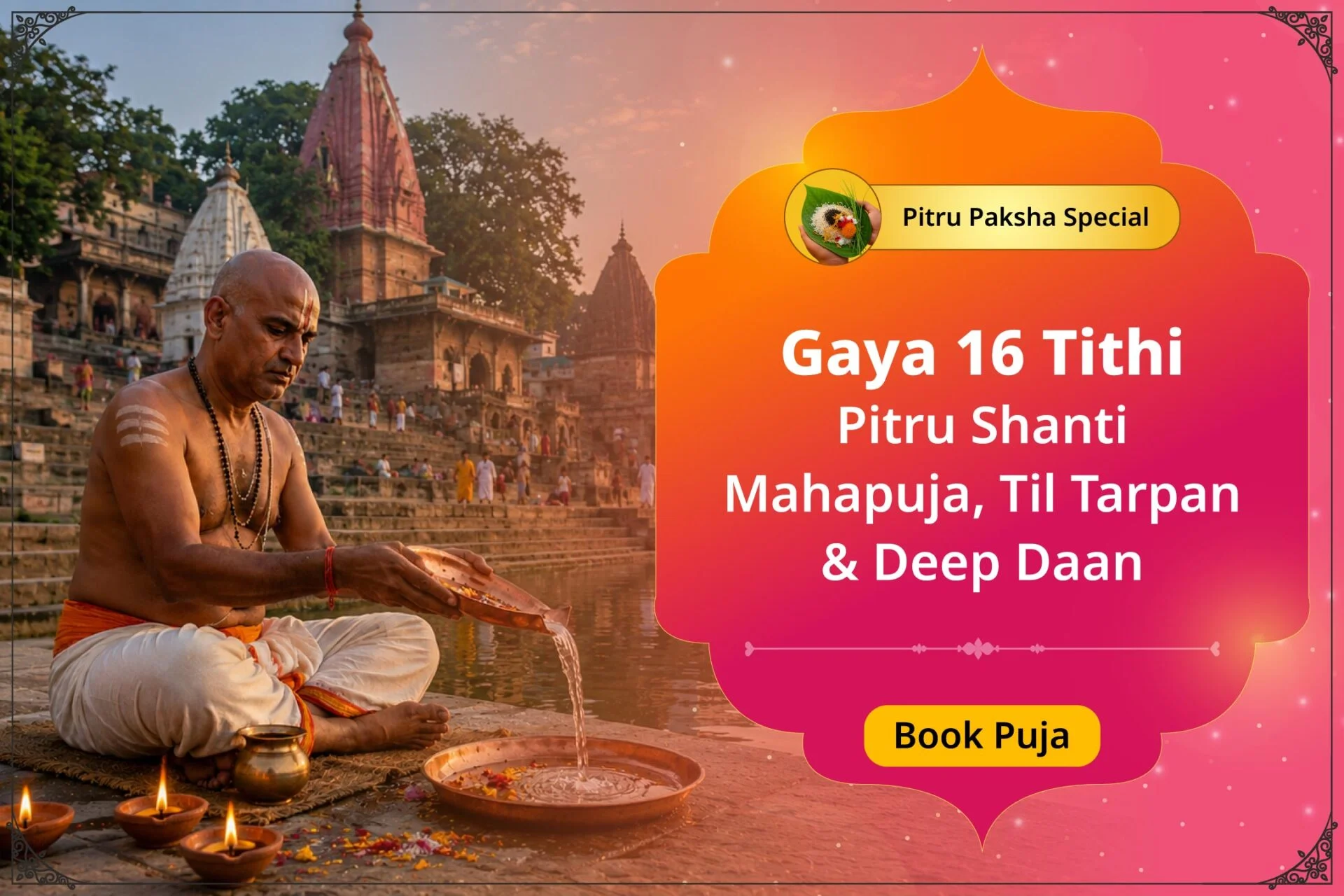
Pitru Paksha Special: Gaya 16 Tithi Pitru Shanti Mahapuja, Til Tarpan & Deep Daan
For Ancestral Peace, Family Harmony & Blessings of the Ancestors



On the 16 sacred Tithis of Pitru Paksha, participate in the Pitru Shanti Mahapuja, Til Tarpan, and Deep Daan at Gaya Dham, and pray for the peace, fulfilment, and spiritual liberation of your ancestors.
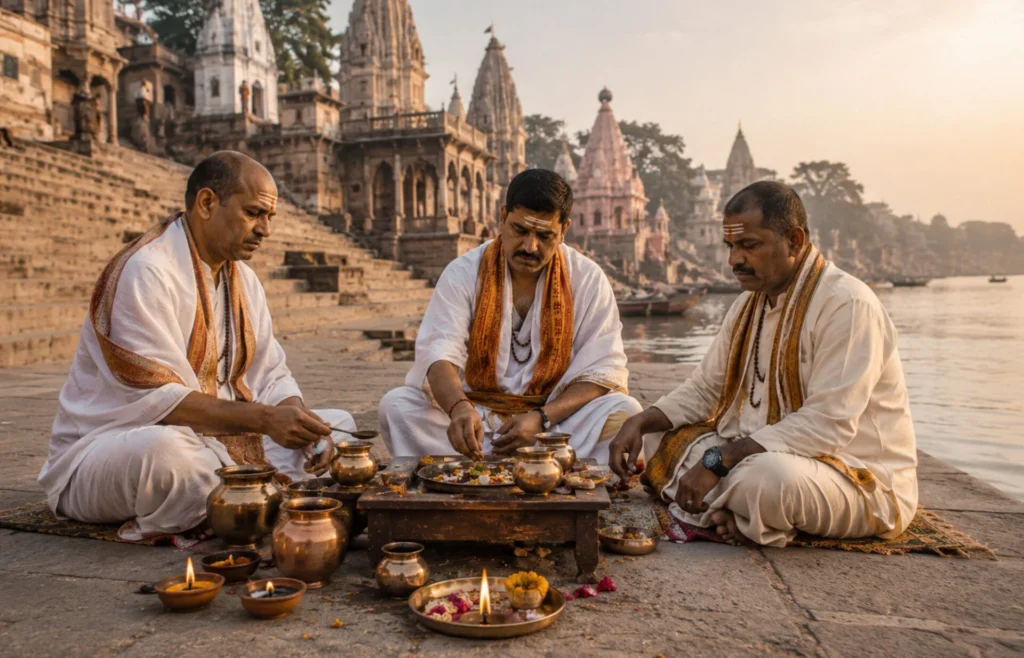
In Sanatan tradition, Pitru Paksha is considered a sacred period dedicated to remembering one’s ancestors and performing Shraddha, Tarpan, and Pind Daan for them. During this period, different Tithis are dedicated to ancestors who passed away on the corresponding lunar date. This is why traditionally, Pitru rituals are performed according to the Tithi of the ancestor’s passing rather than the date of the Gregorian calendar. Through this special ritual on Vedam, prayers for Pitru Shanti will be offered keeping all 16 Tithis of Pitru Paksha in consideration, allowing devotees to pay homage to both known and unknown departed ancestors of their lineage.
Why Is This 16-Tithi Ritual So Significant?
It is not always possible for every family to know the exact Tithi of all their departed ancestors.
As generations pass, such details may also be forgotten. Each Tithi of Pitru Paksha holds its own religious significance, while Sarva Pitru Amavasya, observed at the end of Pitru Paksha, is considered especially important for known and unknown ancestors, those whose death Tithi is not known, and those for whom Shraddha may not have been performed earlier. With this sacred intention, this special ritual will be dedicated to all 16 Tithis of Pitru Paksha. Through the Mahapuja, Til Tarpan, and Deep Daan, prayers will be offered for the peace and spiritual contentment of the ancestors, along with their blessings upon the entire family lineage.
⚠️ What Is the Connection Between Pitru Rin and Pitru Shanti?
According to Sanatan tradition, every person is believed to carry three important spiritual debts—Deva Rin, Rishi Rin, and Pitru Rin. Pitru Rin represents our responsibility and gratitude towards our ancestors, from whom we have received our life, lineage, values, and traditions. Pitru Paksha is considered a sacred period to acknowledge this debt and express gratitude towards them. Religious beliefs also associate Pitru Shanti with peace, harmony, and the well-being of the family lineage. Therefore, performing Tarpan, Puja, and Daan during Pitru Paksha is not merely a religious ritual, but also a meaningful way to remember one’s ancestors and express gratitude towards them.
🛕 Why Is Gaya Considered Special for Pitru Shanti?
Among the major sacred places associated with ancestral rituals in India, Gaya holds exceptional significance. The sacred Vishnupad Kshetra and the Phalgu River, associated with Lord Vishnu, have been important centres for Shraddha, Tarpan, and Pind Daan for generations. The spiritual significance of Gaya is also connected with the sacred legend of Lord Vishnu and Gayasura. According to religious tradition, after Lord Vishnu granted a boon to Gayasura, this sacred land became renowned for performing ancestral rites. Gaya is also traditionally associated with Lord Rama performing ancestral rites for his father, King Dasharatha. Therefore, taking a Sankalp for one’s ancestors at Gaya during the 16 Tithis of Pitru Paksha gives this ritual special religious significance.
🪔🌊 What Is the Significance of Til Tarpan and Deep Daan?
Til Tarpan holds an important place among the sacred rituals performed during Pitru Paksha. In this ritual, ancestors are remembered with devotion while offering water, black sesame seeds, and Kusha grass, with prayers for their spiritual contentment. The word “Tarpan” is associated with satisfaction or contentment. In religious tradition, black sesame seeds are associated with purity, while Kusha grass holds sacred importance in ancestral and Vedic rituals. Deep Daan symbolizes light, remembrance, and devotion. A sacred lamp is offered in the name of the ancestors while praying for their peace and spiritual journey. In this ritual, Deep Daan will be performed as a complementary act of remembrance alongside the principal ancestral rites.
🕉️ What Will Be Performed in This Special Ritual?
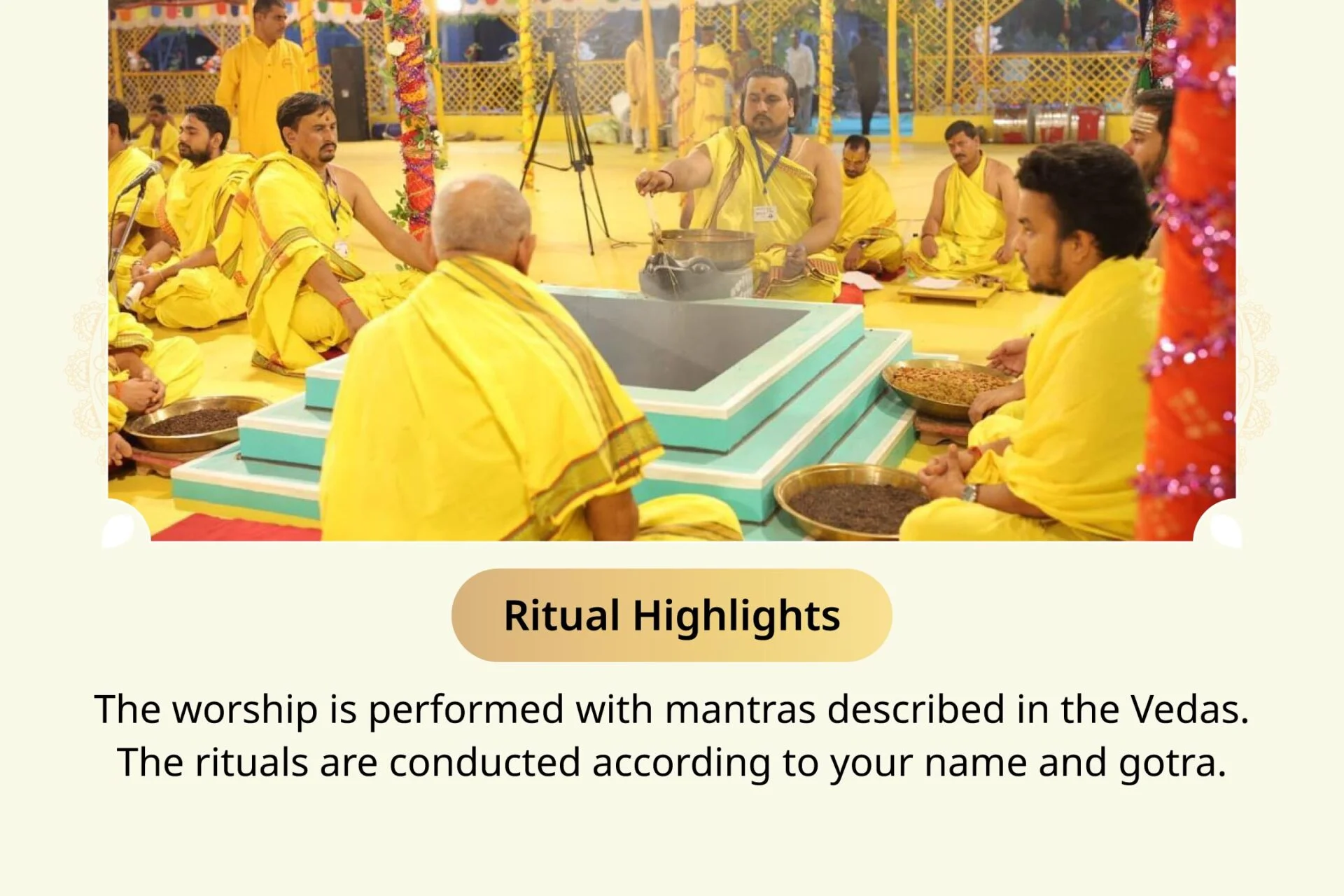
During Pitru Paksha, a Sankalp will be taken in your name and Gotra at the sacred pilgrimage site of Gaya, followed by the Pitru Shanti Mahapuja. The departed ancestors of the family lineage will be remembered with devotion, and prayers will be offered for their peace and spiritual contentment. Along with the Mahapuja, Til Tarpan will be performed using black sesame seeds, water, and Kusha grass, followed by Deep Daan with prayers for the peace and Sadgati of the ancestors. Through this special Sankalp dedicated to the 16 Tithis of Pitru Paksha, prayers will be offered for the peace of known and unknown ancestors, the happiness and prosperity of the family, and the blessings of one’s forefathers.
🛕 Why is Gaya considered special for Pitru Shanti?
Among the major Pitru Teerthas of India, Gaya holds exceptional significance. The sacred Vishnupad Kshetra and Falgu River, associated with Lord Vishnu, have remained prominent centres for Shraddha, Tarpan, and Pind Daan for generations. The spiritual significance of Gaya is also connected with the sacred legend of Lord Vishnu and Gayasura. According to religious tradition, after Lord Vishnu granted a boon to Gayasura, this land became renowned for ancestral rites. Gaya is also associated with the tradition of Lord Shri Ram performing ancestral rites for his father, Maharaja Dasharatha. Therefore, taking a Sankalp for one’s ancestors at Gaya during the 16 Tithis of Pitru Paksha gives this ritual profound religious significance.
🌊 What is the significance of Til Tarpan?
🌊 Til Tarpan holds a special place among the major rituals of Pitru Paksha. Water, black sesame seeds, and Kusha grass are offered while remembering one’s ancestors and praying for their satisfaction. The word ‘Tarpan’ is associated with Tripti, or satisfaction. In religious tradition, black sesame is associated with purity, while Kusha has an important place in sacred rituals. Because of Gaya’s ancient Pitru traditions connected with Vishnupad and the Falgu River, Til-Jal Tarpan performed here is considered especially significant.
🪔 Why is Deep Daan performed?
A lamp represents light, remembrance, and devotion. By offering a Deep in the name of one’s ancestors, devotees pray for their peace and spiritual upliftment. In this ritual, Deep Daan will be performed as a supplementary act of remembrance alongside the primary ancestral rites. It is intended to complement the Pitru Puja and Tarpan rather than replace the traditional Tithi-based ancestral rites.
During Pitru Paksha, a Sankalp will be taken in your name and Gotra at Gaya Teerth, followed by the Pitru Shanti Mahapuja. Departed ancestors of the family lineage will be remembered with devotion, and prayers will be offered for their peace and satisfaction. Along with this, Til Tarpan will be performed using black sesame seeds, water, and Kusha, followed by Deep Daan with prayers for the peace and spiritual upliftment of the ancestors. Through this special Sankalp dedicated to the 16 Tithis, prayers will be offered for known and unknown ancestors, family well-being, prosperity, and ancestral blessings.
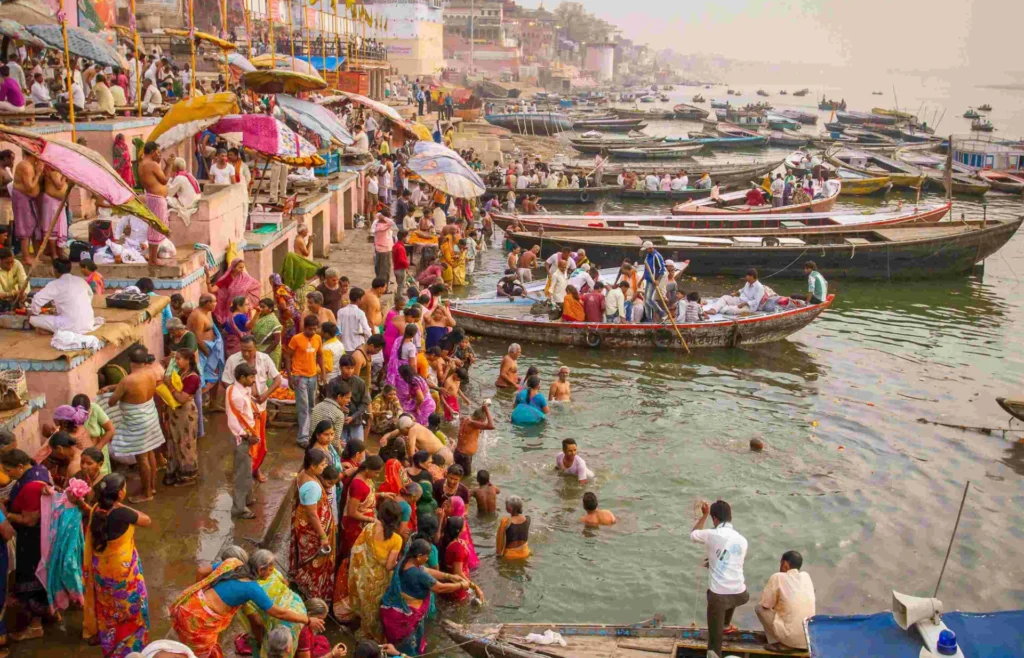

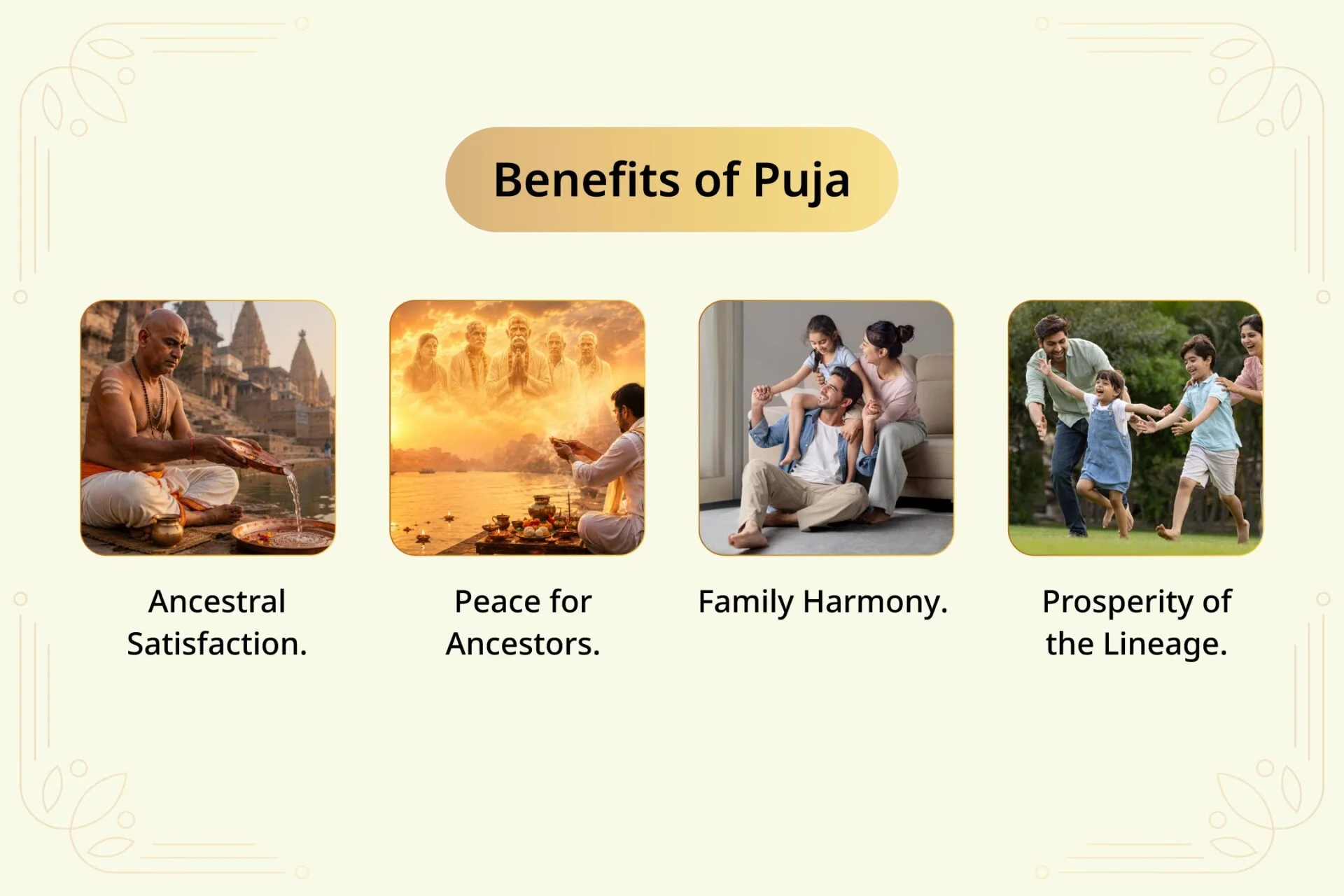
Benefits of Puja
Special Prayers for Pitru Shanti
Through this special ancestral ritual dedicated to the 16 Tithis, prayers will be offered for the peace...
and spiritual upliftment of departed ancestors.
Relief from Family Obstacles and Discord
With the blessings of the ancestors, special prayers will be offered for relief from long-standing family tensions,...
disagreements, and obstacles in life.
Prosperity and Well-being of the Lineage
Through this ritual, prayers will be offered for family harmony, financial stability, mutual understanding, and the progress...
and spiritual upliftment of departed ancestors.
Ancestral Blessings and Protection
Through Mahapuja, Til Tarpan, and Deep Daan dedicated to all 16 Tithis of Pitru Paksha, prayers will...
be offered for the grace, protection, and blessings of the ancestors.
Satisfaction of Departed Ancestors
Through Til Tarpan and Pitru Puja, prayers will be offered for the satisfaction, peace, and spiritual well-being...
of known and unknown ancestors of the family lineage.
How to participate in puja?

Choose Puja
Choose the pooja and offerings like - clothes donation, cow service, brahmin feeding etc.

Checkout
Pay your Dakshina securely using UPI, Card or Net Banking.

Checkout Details / Sankalp Form
Enter Prasad name, Gotra, Prasad distribution address and Puja wish

Watch Live Puja
Short Darshan video will be shared on Puja date. Full video including name-gotra will be sent on WhatsApp within 2-3 days.

Prasad delivery to home
Authentic Prasad from the temple will be delivered within 7-10 days.
Benefits of Puja
One Person
1500
With Partner

2100
Family

3100
VIP
11,000
₹2100
One Person
Reviews from Users
Ananya Sharma
Rahul Mehta
Priya Verma
Frequently Asked Questions
What is this Puja and what is its significance?
Who can participate in this Puja?
Can I participate in the Puja from anywhere?
What details are required for the Sankalp?
How will the Puja be performed?
Will I receive photos or videos of the Puja?